
Supporting your troop means taking concrete action to help the specific Canadian Armed Forces unit, garrison, or military community you’re personally connected to, whether that’s your family member’s deployment group, your local base, or the service members in your own neighbourhood. Unlike broad gestures of general military appreciation, this approach focuses on building real, sustained relationships with a particular group of service members and their families through hands-on community activities, care packages, event participation, and direct engagement.
The yellow ribbon has long symbolized our commitment to those who serve, but that symbol gains true meaning when paired with tangible support. Many Canadians want to help military families but don’t know where to start or assume large organizations handle everything. The reality is that individual units and their families face unique challenges depending on deployment schedules, base locations, and operational tempo. Your direct involvement makes a measurable difference in morale, family stability, and community connection.
This guide provides practical ways to identify and support your troop, recognizing that your connection might come through a family member’s service, proximity to a military base, or a personal relationship with Canadian Armed Forces personnel. You’ll learn how to coordinate with unit family support networks, organize meaningful activities that address real needs, and build lasting connections that extend beyond deployment cycles. The goal is simple: transform goodwill into action that genuinely helps the service members and families in your military community.
Understanding What ‘Your Troop’ Means

Before you can effectively support your troop, you need to identify which troop is truly yours. The phrase “your troop” carries different meanings depending on your personal connection to the Canadian Armed Forces, and understanding this distinction shapes how you can make the most meaningful impact.
For some, your troop is a specific military unit where a family member serves. Perhaps your spouse is with 3rd Battalion, Princess Patricia’s Canadian Light Infantry, or your daughter serves aboard HMCS Halifax. This direct family connection creates a natural focus for your support efforts, as you’re already part of that unit’s extended family and understand their deployment cycles, challenges, and community.
Your troop might also be the local garrison community where you live. Cities like Edmonton, Halifax, Petawawa, and Valcartier have strong military presences, and residents often develop connections to their local bases through neighbours, friendships, or community involvement. Supporting your local garrison means engaging with the military families and members who share your community, attend the same schools, and shop at the same stores.
For others, your troop encompasses the broader Canadian Armed Forces family. You may not have a direct family member serving or live near a base, but you feel a commitment to supporting all Canadian military members and their families. This broader interpretation is equally valid and opens opportunities to support national initiatives, multiple units, or programs that serve the entire military community.
Identifying your troop isn’t about choosing one narrow definition. Many Canadians support at multiple levels simultaneously, helping a family member’s specific unit while also contributing to wider Canadian Forces programs through organizations like Canadian Forces Support.
Community Activities That Directly Support Your Troop
Organizing Care Package Drives
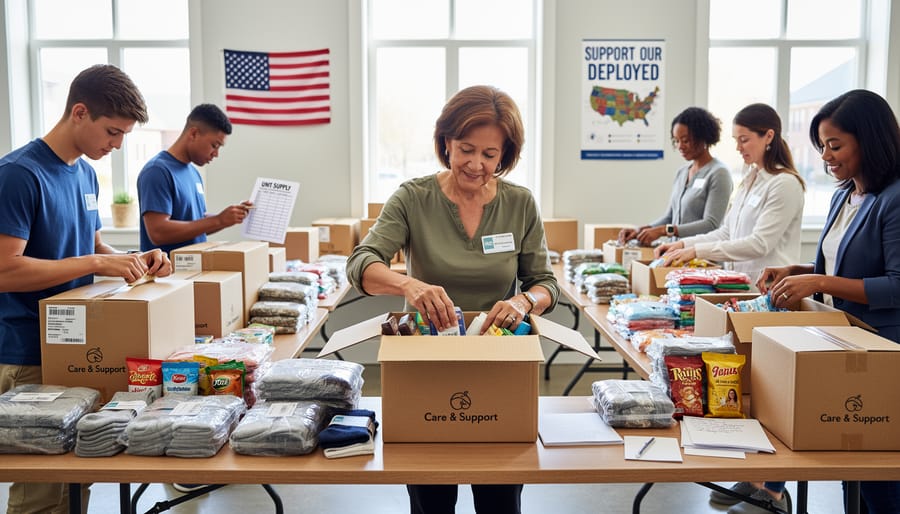
Organizing a care package drive connects you directly with the members of your troop, whether that’s a family member’s unit, your local garrison, or a specific regiment you want to support. Start by reaching out to the unit’s family liaison officer or work through your local Military Family Resource Centre to confirm deployment details, mailing addresses, and any restrictions on what can be sent. These contacts ensure your packages reach the right people and comply with military postal regulations.
The most meaningful packages balance practical necessities with personal touches that remind deployed members they’re remembered. Focus on items that make daily life easier and boost morale:
- Non-perishable snacks like protein bars, beef jerky, trail mix, and individually wrapped treats
- Personal hygiene products including travel-size toiletries, wet wipes, hand sanitizer, and lip balm
- Entertainment items such as playing cards, puzzle books, magazines, and USB drives with movies or music
- Comfort items like quality socks, eye masks for sleep, and small pillows
- Letters and cards from community members, especially kids’ drawings
Avoid sending aerosols, glass containers, perishable food, alcohol, pork products (depending on deployment location), or anything that melts easily. Check current prohibited items lists with your military contact before collecting donations.
Coordinate with local businesses, schools, and community groups to amplify your community troop support efforts, many will donate items or space for collection boxes. Set a realistic timeline that accounts for international shipping delays, typically six to eight weeks before holidays or significant dates. Include a packing list and shipping instructions for volunteers, and consider hosting a group packing event where community members can write personal notes to include with the packages.
Creating Welcome Home Events
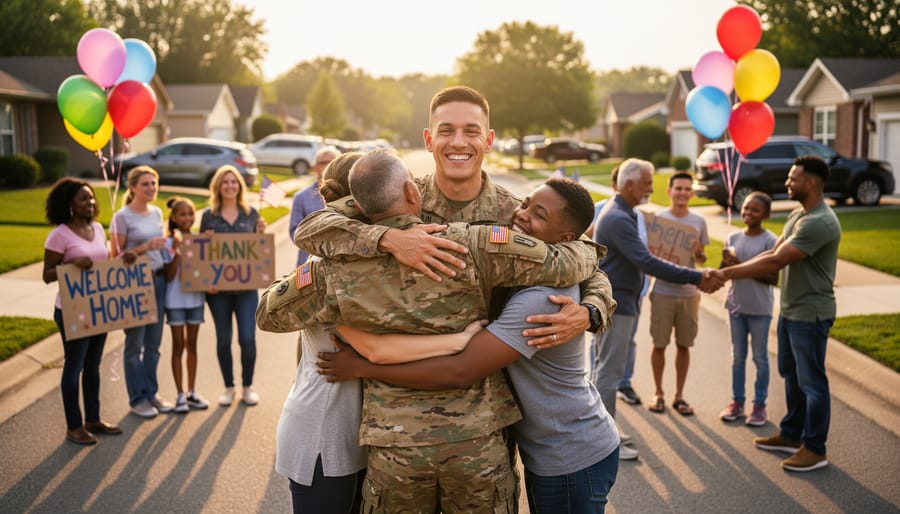
Welcome home events create powerful moments of recognition that show returning members their community values their service and sacrifice. Whether you’re planning a small gathering for a handful of returning personnel or coordinating a larger celebration for an entire unit, these events provide tangible emotional support during the critical transition from deployment to home life.
For small-scale events, consider organizing a neighborhood gathering where families can welcome their loved one home with familiar faces and personal touches. One military spouse in Petawawa described how neighbors arranged a simple backyard barbecue when her husband returned from a six-month deployment, complete with his favorite foods and a “Welcome Home” banner the kids decorated. “It wasn’t elaborate, but seeing twenty people there just for him made the homecoming feel special beyond our family reunion,” she shared.
Larger unit-level events require coordination with base leadership and the Military Family Resource Centre. Start planning six to eight weeks before the anticipated return date, securing venue space and confirming participation numbers. Keep the focus on the returning members rather than making it a general community festival. Effective elements include personalized welcome signs, photo displays from the deployment, and designated quiet spaces where members can step away if they feel overwhelmed.
The yellow ribbon symbol works beautifully as decoration, visible reminders that the community stood behind them throughout their absence and celebrates their safe return.
Supporting Military Families While Members Are Deployed
Deployment separates military families from their support systems at exactly the moment they need them most. When someone from your troop deploys, the families left behind face months of managing household responsibilities, childcare, and emotional stress largely on their own. Community activities that directly support these families make deployment more bearable and show military members that their loved ones are cared for while they serve.
Start a meal train through your community group, religious organization, or neighbourhood network. Coordinate weekly or bi-weekly meal deliveries to deployed members’ families, focusing on freezer-friendly options and dietary preferences. One hot meal a week sounds small, but it removes decision fatigue and provides a touchpoint that reminds families they’re not alone.
Organize childcare networks among trusted community members. Offer to pick up kids from school, host playdates, or provide emergency backup when the at-home parent has appointments. Military spouses managing everything solo rarely ask for help, you need to offer specifically: “I can take the kids Saturday afternoon” works better than “let me know if you need anything.”
Create home maintenance teams for seasonal tasks deployment families can’t handle alone, snow removal, lawn care, furnace checks, minor repairs. Connect families who need financial assistance with Canadian Forces Support resources that can bridge gaps when unexpected costs hit during deployment.
Plan family inclusion events specifically for deployment families: movie nights, park outings, holiday gatherings. These activities combat isolation and give kids positive experiences during a parent’s absence, creating community bonds that last beyond the deployment itself.
Volunteer Opportunities Through Local Bases and Organizations
The most direct path to supporting your specific troop is through established volunteer programs at your local garrison or local Military Family Resource Centres. These organizations constantly need volunteers for activities that directly benefit the military community you’re connected to.
MFRCs offer diverse opportunities that match different schedules and skills. You might help with deployment support programs, assist with family events, provide childcare during unit meetings, or support newcomer families adjusting to base life. The beauty of MFRC volunteering is that they already understand your troop’s needs and can channel your efforts exactly where they’ll make the biggest difference.
Contact your local garrison’s community services office to learn about unit-specific volunteer needs. Many bases welcome civilian volunteers for morale-building events, family days, and administrative support roles. If you’re connected to a specific unit through a family member, ask them about appropriate volunteer opportunities, some units coordinate their own support networks for deployed members’ families.
Canadian Forces Support programs also recruit volunteers for recreational activities, youth programs, and special events. These structured opportunities ensure your time is well-spent and your efforts align with what your troop actually needs. Most programs provide orientation and ongoing support, making it easy to start even if you’re new to military community involvement.
The key advantage of connecting through official channels is accountability, you’ll know your efforts are welcome, appropriate, and making a real difference.
Fundraising and Awareness Activities for Your Troop
Raising funds and building awareness for your troop creates tangible support while strengthening the community’s connection to the military members who serve. Whether you’re supporting a family member’s regiment, your local garrison, or a specific unit facing deployment, fundraising activities channel resources directly where they’re needed most.
The most effective fundraising begins with a clear purpose. Identify what your troop needs, emergency family assistance funds, welcome home celebration costs, or resources for families during deployment. Once you’ve established this through unit liaisons or your local Military Family Resource Centre, you can design activities that resonate with donors who want to make a real difference.
Successful fundraising events for troops include charity runs or walks where participants wear yellow ribbons, silent auctions featuring items donated by local businesses who support military families, community dinners that bring civilians and military members together, or seasonal drives that collect both funds and needed items. The key is creating events that educate the community about your troop while raising money.
To organize a fundraising event that delivers results, follow this process:
- Connect with your troop’s official contacts to confirm their specific needs and get approval for fundraising in their name.
- Recruit a core planning team from your community, including people with event experience and connections to local businesses.
- Choose an event type that matches your community’s interests and the fundraising goal, whether modest or ambitious.
- Secure necessary permits, insurance, and partnerships with Canadian Forces Support or veteran programs that can lend credibility.
- Promote through social media, local media, and military community networks with clear messaging about which troop benefits and why.
- Execute the event with visible yellow ribbon branding and opportunities for attendees to hear directly from military families.
- Report back to donors and your troop on exactly how the funds were used, building trust for future support.
Awareness campaigns complement fundraising by educating your community about your troop’s contributions and sacrifices. Simple initiatives like coordinating yellow ribbon displays across your town during deployment periods, organizing speakers from your troop to share their experiences at schools or community groups, or creating social media campaigns that highlight individual members’ service all build the understanding that leads to sustained support. The visibility reminds everyone that your troop isn’t an abstract concept, it’s real people who deserve recognition and assistance.
How to Connect With Your Troop’s Needs
The most effective support starts with understanding what your specific troop actually needs rather than assuming. Military units face different challenges depending on their deployment status, location, and current operations.
Start by reaching out to your unit’s Family Liaison Officer or the Military Family Resource Centre serving your troop’s community. These contacts act as bridges between civilian supporters and military needs, and they can tell you exactly where help matters most right now. If you’re supporting a family member’s unit, ask them who handles community relations, most regiments have designated personnel for civilian engagement.
Canadian Forces Support programs offer structured ways to channel your efforts appropriately. Their family assistance initiatives can guide you toward gaps that need filling, whether that’s emergency support for families facing help during tough times or practical needs during deployment cycles. Working through established programs ensures your contributions reach the people who need them most.
Respect operational security in your communications. Never ask about deployment timelines, specific locations, or mission details. Focus your questions on family support, morale initiatives, and community activities that don’t compromise security protocols.
Ask specific questions: What are families struggling with right now? Are there upcoming events where volunteers are needed? Which items are most useful for care packages to this particular unit? The answers will vary significantly between a naval crew preparing to sail, an army unit training for deployment, and air force personnel operating from a permanent base.
Keep communication channels open throughout your involvement. Needs change as circumstances shift, and staying connected with your liaison ensures your community activities continue addressing real priorities rather than yesterday’s concerns.
Supporting your troop through community activities creates connections that matter far more than money alone can achieve. Whether you’re rallying behind a family member’s unit, supporting your local garrison, or standing with the broader Canadian Armed Forces community, your involvement sends a powerful message: you see their service, you value their sacrifice, and you’re committed to standing beside them.
The yellow ribbon symbol represents this commitment. Display it proudly as a visible reminder that your troop has a community ready to support them through deployments, homecomings, and everyday challenges. It’s a simple gesture that carries profound meaning for those who serve and their families.
You don’t need to organize massive events or raise thousands of dollars to make a difference. A single care package assembled with care, an afternoon spent helping a military family with yard work, or showing up to welcome home returning members, these actions create ripples of impact that extend far beyond the moment. Military families remember who stood with them when it mattered most.
Start somewhere. Reach out to your local Military Family Resource Centre, connect with Canadian Forces Support programs, or simply ask a military family in your community what would help most right now. Your troop needs advocates who take action, and that starts with one person deciding to get involved. That person can be you.